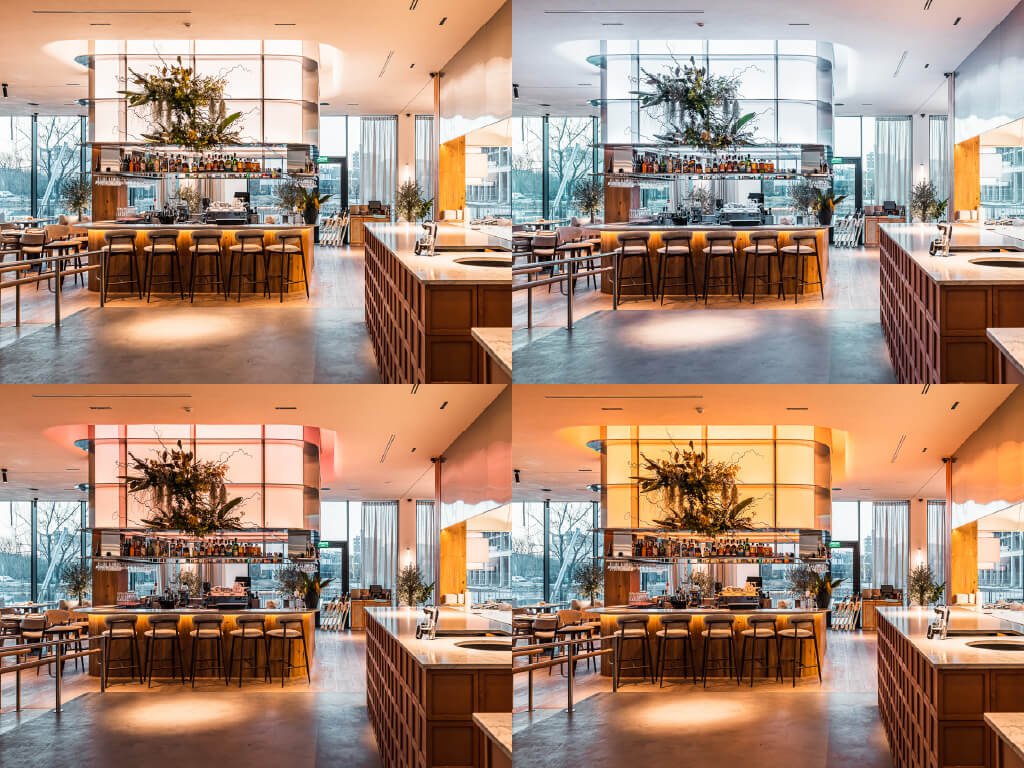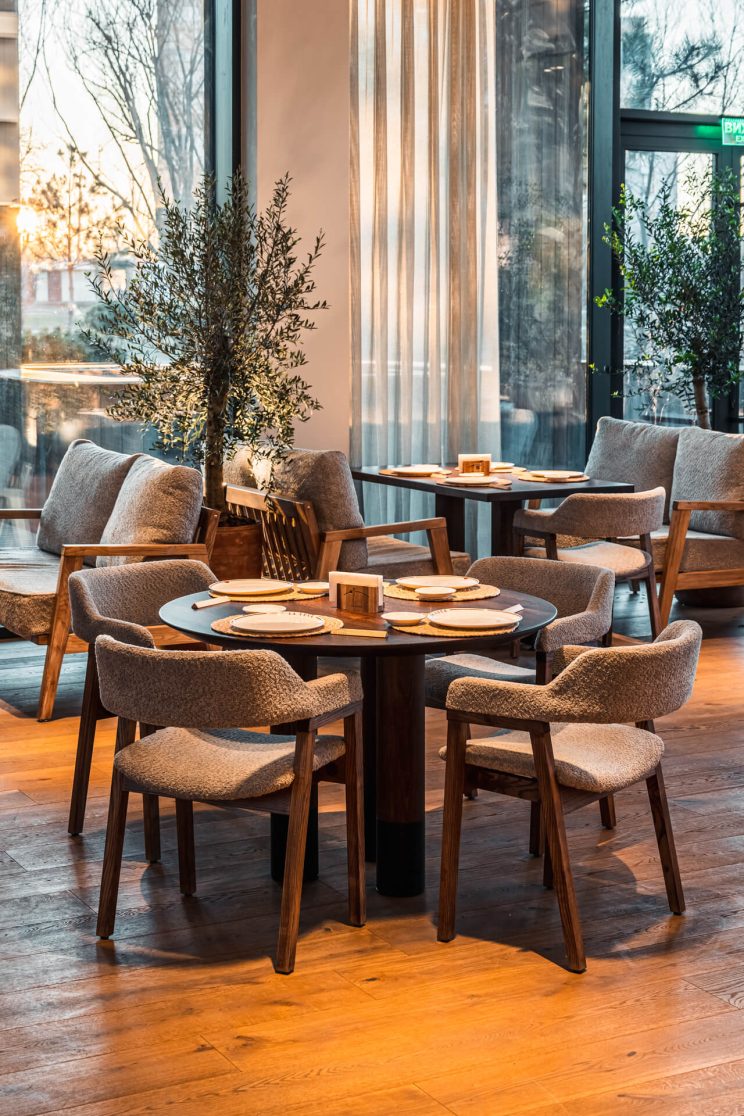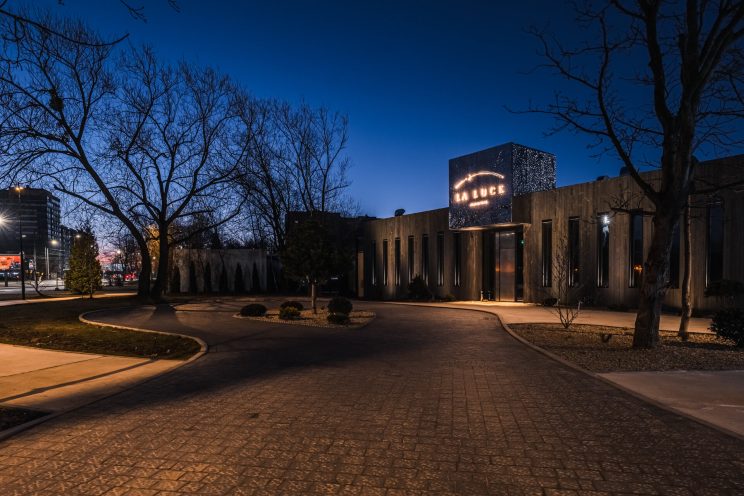
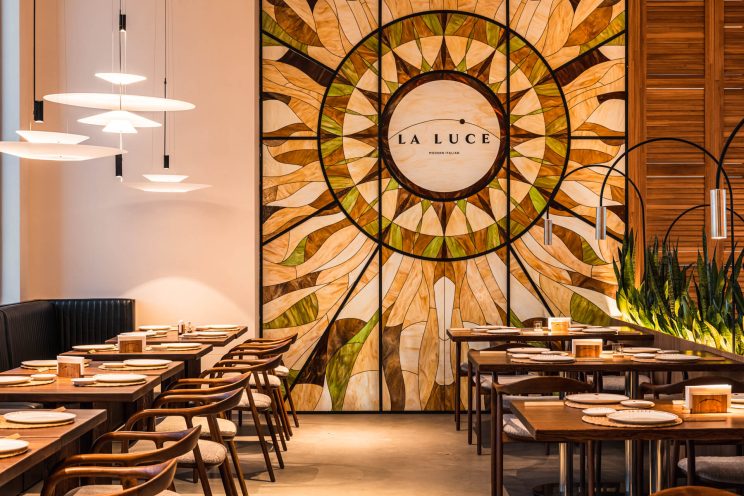
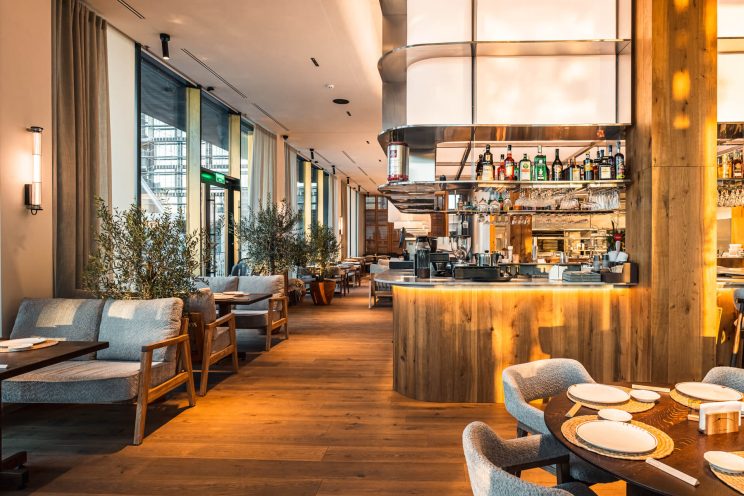
Mykola Mihal, Head of Lighting Design at LUMINAL, shares insights into the project’s realization:
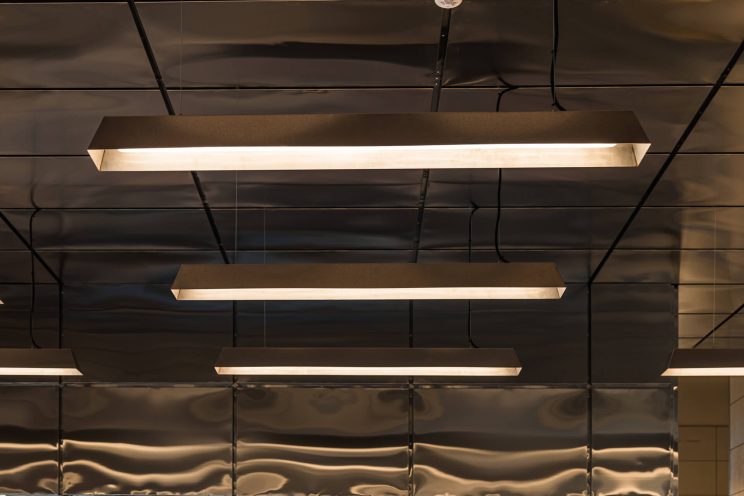
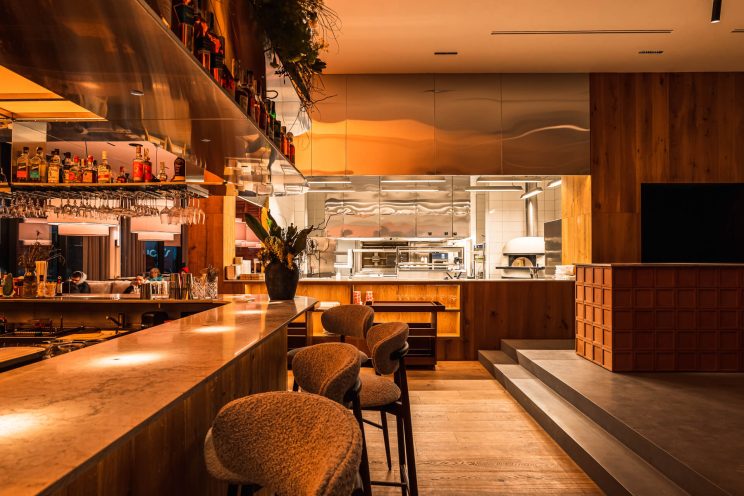
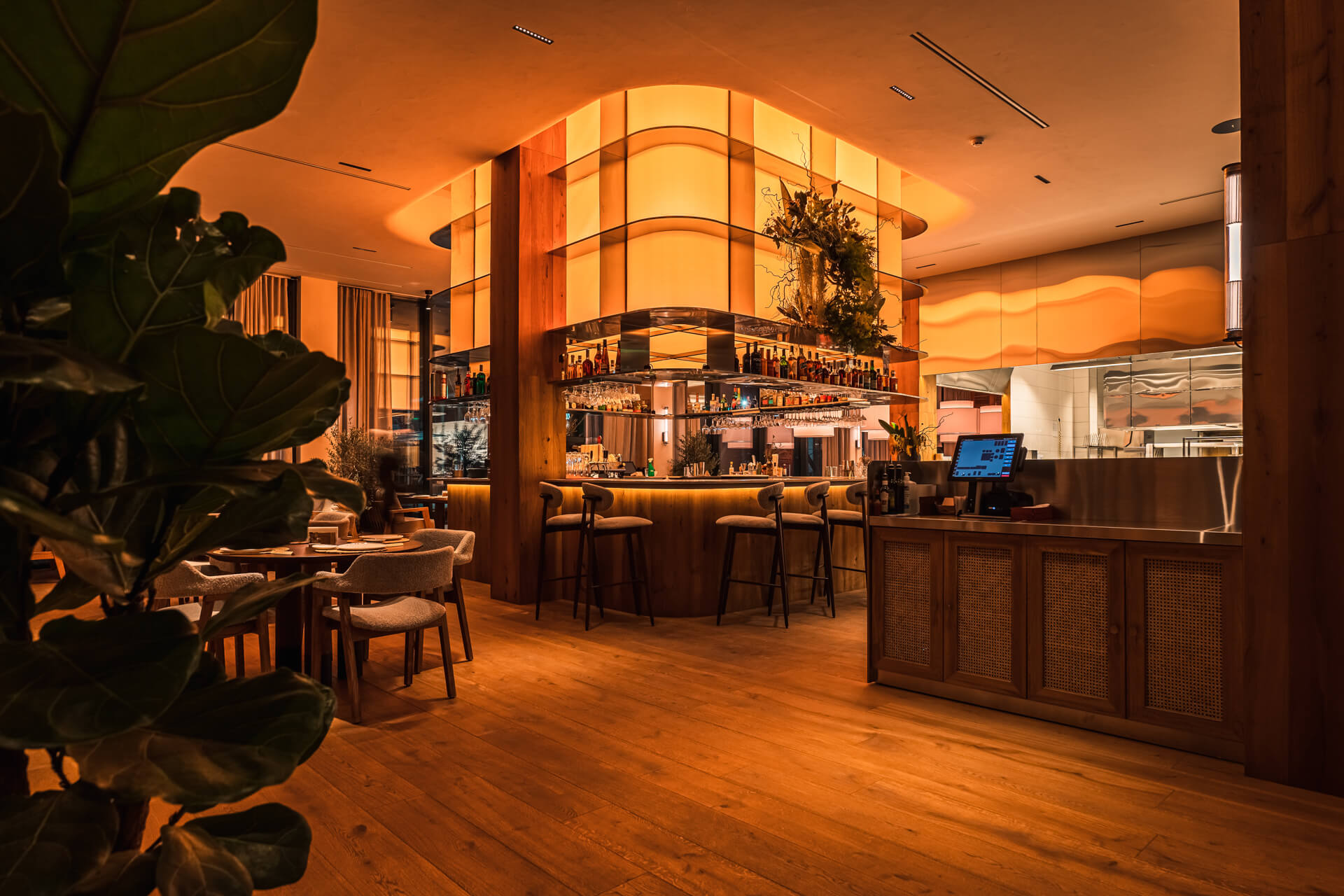
“Initially, we considered using a lightbox — an advertising structure with a back panel and illuminated lines forming a light panel. However, this solution had several drawbacks. First, the large surface of the lightbox would have required 30–40 times more energy due to inefficient light sources. Second, the rounded corners complicated manufacturing, and within the confined space of the bar area the structure would have overheated, reducing the lifespan of the light sources. For these reasons, we abandoned this idea. Instead, we chose a ceiling-mounted structure that works with optics and creates a more natural impression of sunlight. Finding the right balance between brightness and material was not easy.”
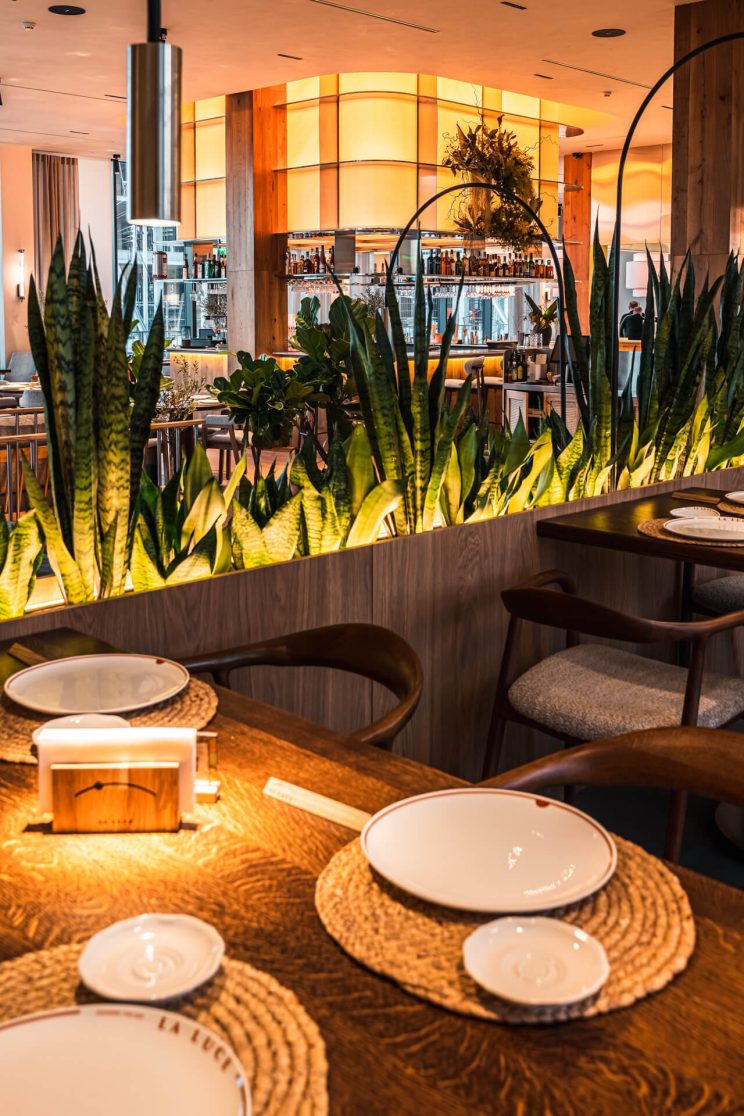
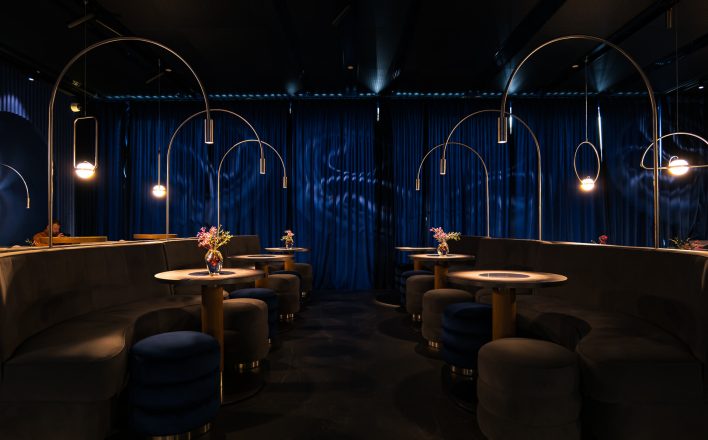
Dense fabric under mixed lighting lost its color, appearing dull. To prevent this, external luminaires were added to emphasize the tone of the sky even during the day. When fine-tuning the effect on site, the team observed how the sun and sky interact and change throughout the day. However, another challenge emerged: the hall is quite deep, and the colors of the sky outside were not clearly visible. Standing inside near the bar with our “sun,” we could barely see the horizon to adjust the light to its blue tones.
At first, a saturated blue color was chosen, but during the day it appeared too cold. LUMINAL’s lighting designers noticed that the water and buildings on the horizon reflect warm sunlight, adding softer, warmer hues. In the enclosed space, the light blended and sometimes produced an unnatural green tint. The team therefore continued experimenting on site to achieve a gradient resembling a desert sun: warmth below and coolness above.
Lighting designer’s insight: “The most challenging part was recreating daylight while combining warm and cool tones.”