
What is human-centric lighting?
Human-centric lighting combines light for vision with light that accounts for a person’s emotional and biological needs. A more detailed definition is provided by the German Electrical and Electronic Manufacturers’ Association: light acts in multiple ways — visually, emotionally, and biologically, and Human Centric Lighting (HCL) provides specific, long-term support for people’s health, wellbeing, and productivity through the comprehensive planning and implementation of light’s visual, emotional, and especially biological effects. In practical terms, three factors are therefore relevant: the visual, emotional, and biological impact of light.
The first scientific evidence of light’s emotional and biological effects dates back to the 1960s, through experiments conducted without daylight in a bunker, which demonstrated how light affects circadian rhythm. In 2001, research by George Brainard and Kavita Thapan significantly deepened understanding of human biorhythms: they described an active function based on the suppression of the hormone melatonin and linked it to a receptor in the eye. Somewhat later, David Berson described photosensitive ganglion cells, which function as an additional photoreceptor in the eye — a generator of circadian rhythm.
These receptors allow the human eye not only to see, but also to synchronize the internal clock using light. Based on these discoveries, the Commission Internationale de l’Éclairage formulated the term “integrative lighting,” which accounts for not only physiological but also psychological effects of illumination. Further discussions led to an expanded definition of “light,” which since 2020 the Commission Internationale de l’Éclairage no longer limits solely to the phenomenon of vision, but also includes non-visual responses.
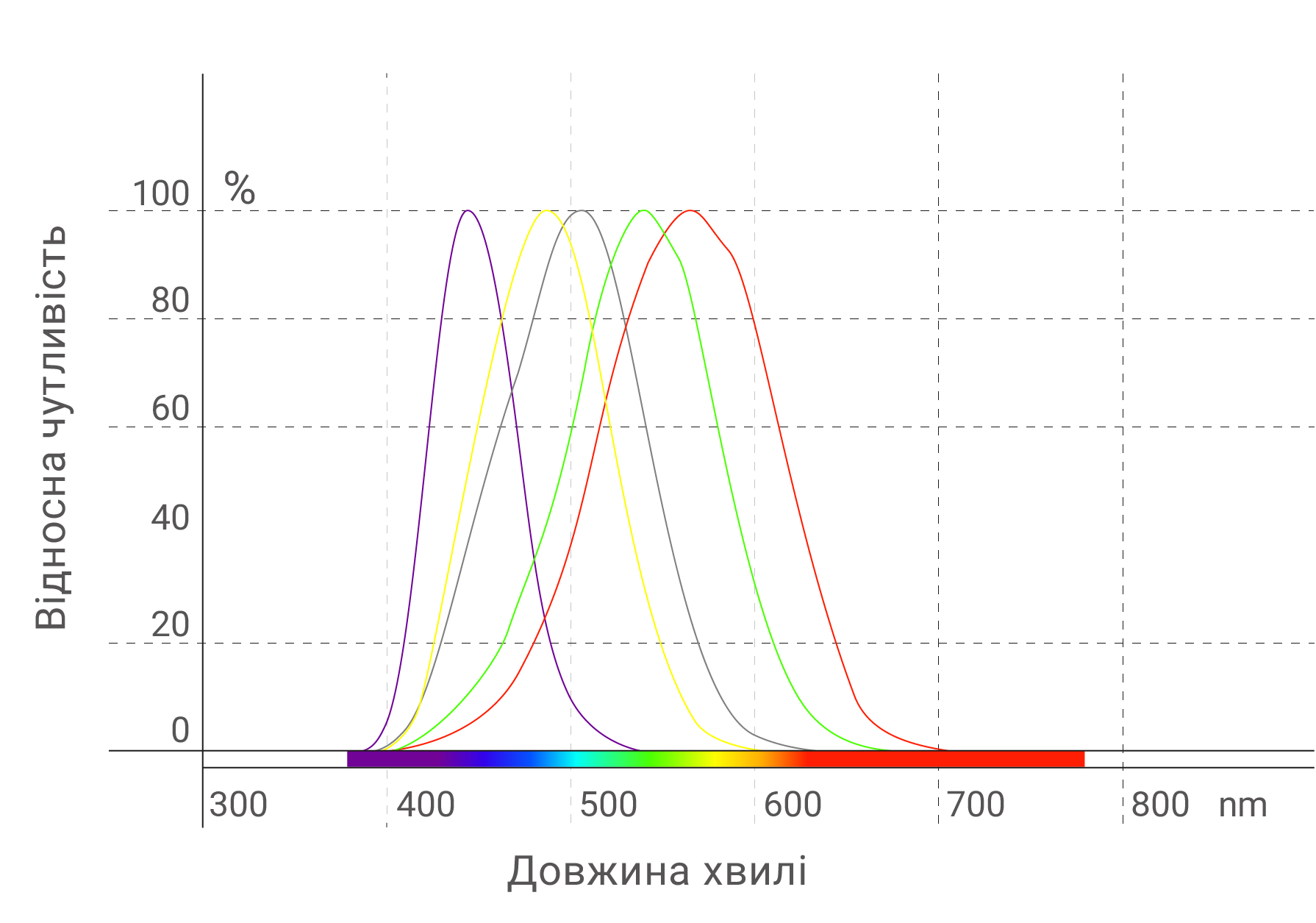
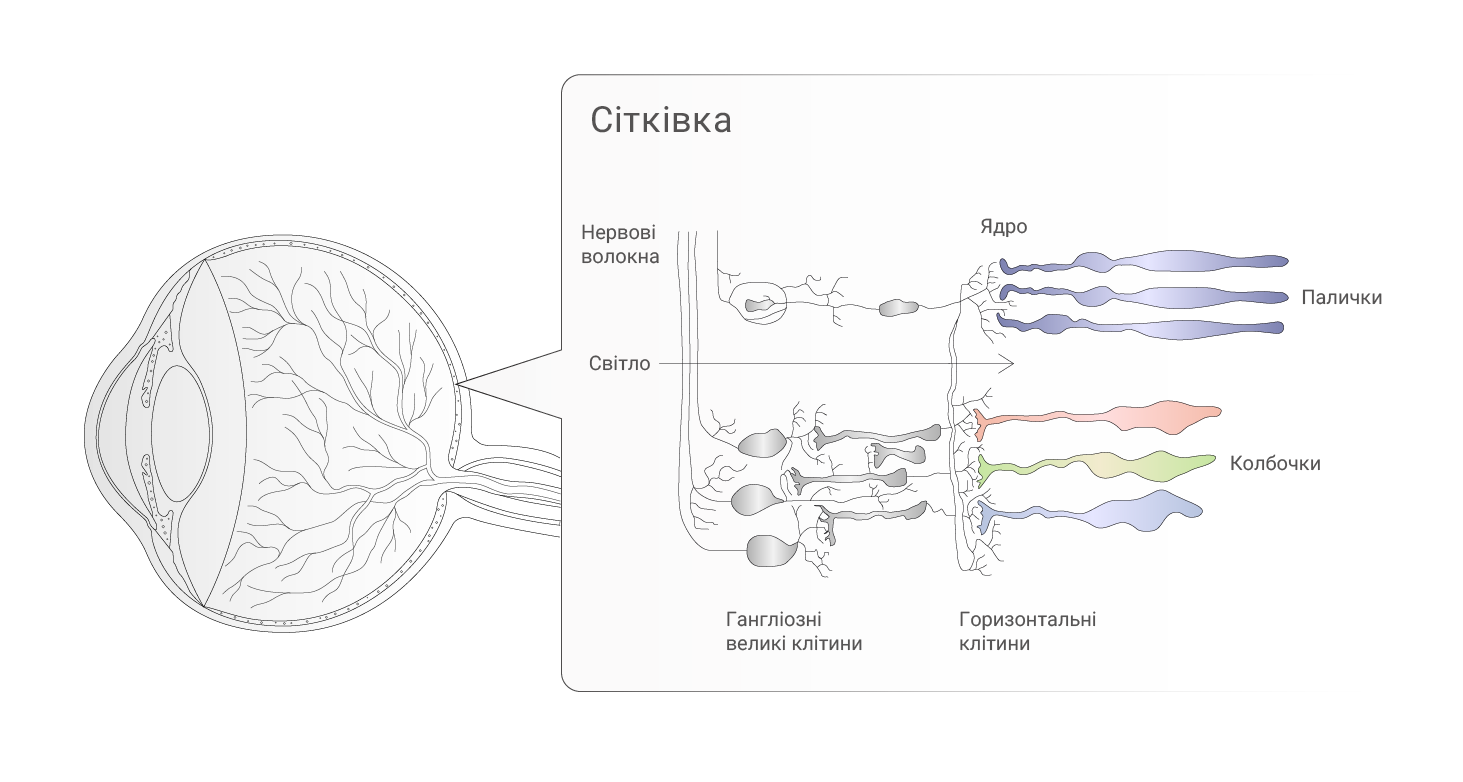 We perceive the surrounding world visually through rods and cones, while ganglion cells containing melanopsin control biological effects.
Which light characteristics matter for circadian rhythm?
Four aspects of light belong to the key features of non-visual perception: time, brightness, spectrum, and light distribution. Since these parameters affect circadian rhythm to varying degrees, it’s recommended to prioritize them during planning. Below are some recommendations.
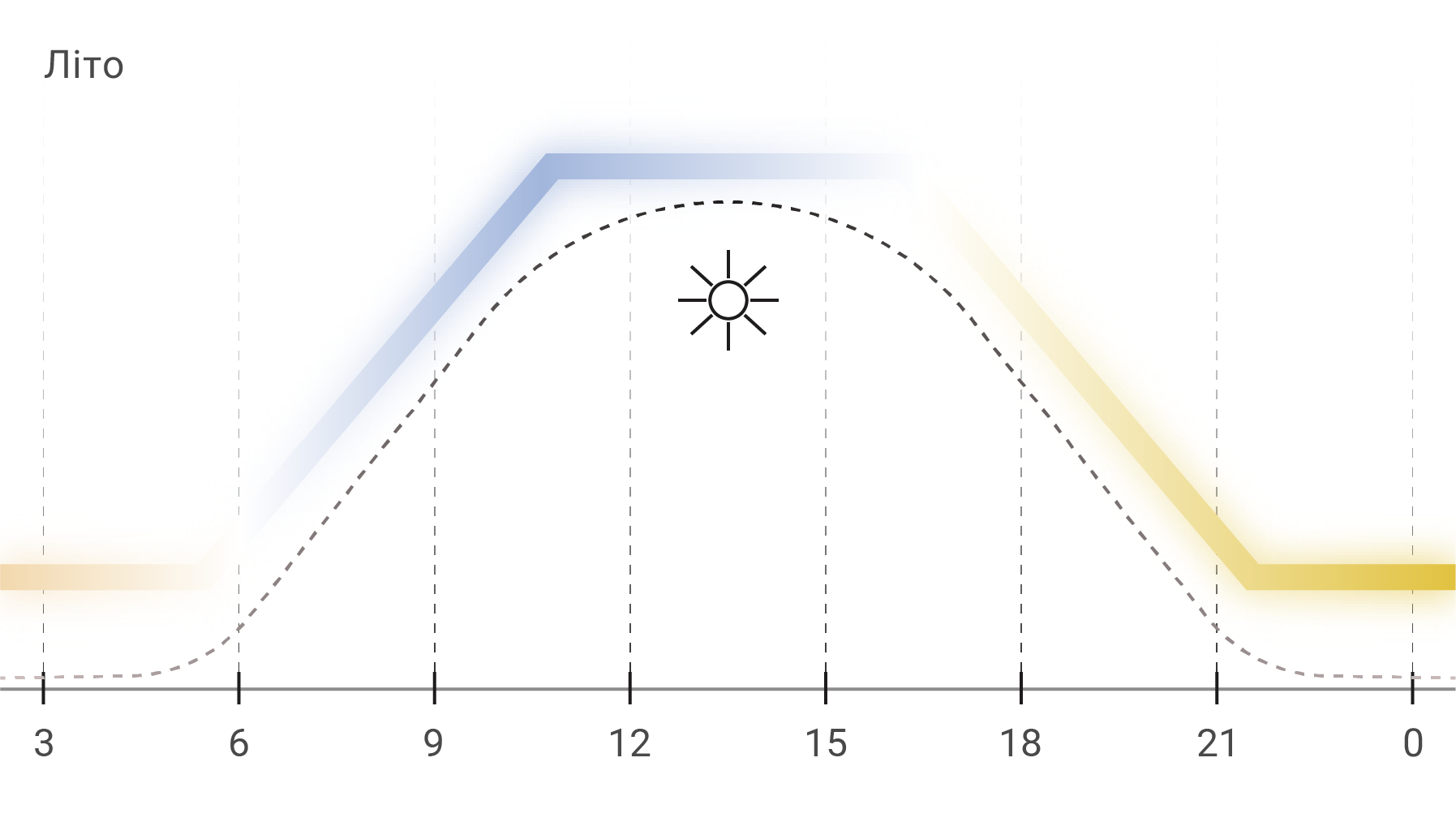
Let’s start with the time factor, since different lighting conditions during day and night are crucial for the internal clock. Since people spend most of their time indoors, it’s important to synchronize the timing patterns of daylight, artificial lighting, and the internal clock as effectively as possible. It’s worth noting that alignment with daylight can only be relative, not absolute. Age also affects the non-visual effect of light: starting at age 32, an additional need for illuminance of approximately 2% per year is expected to compensate for age-related changes such as pupil constriction and lens clouding.
 |
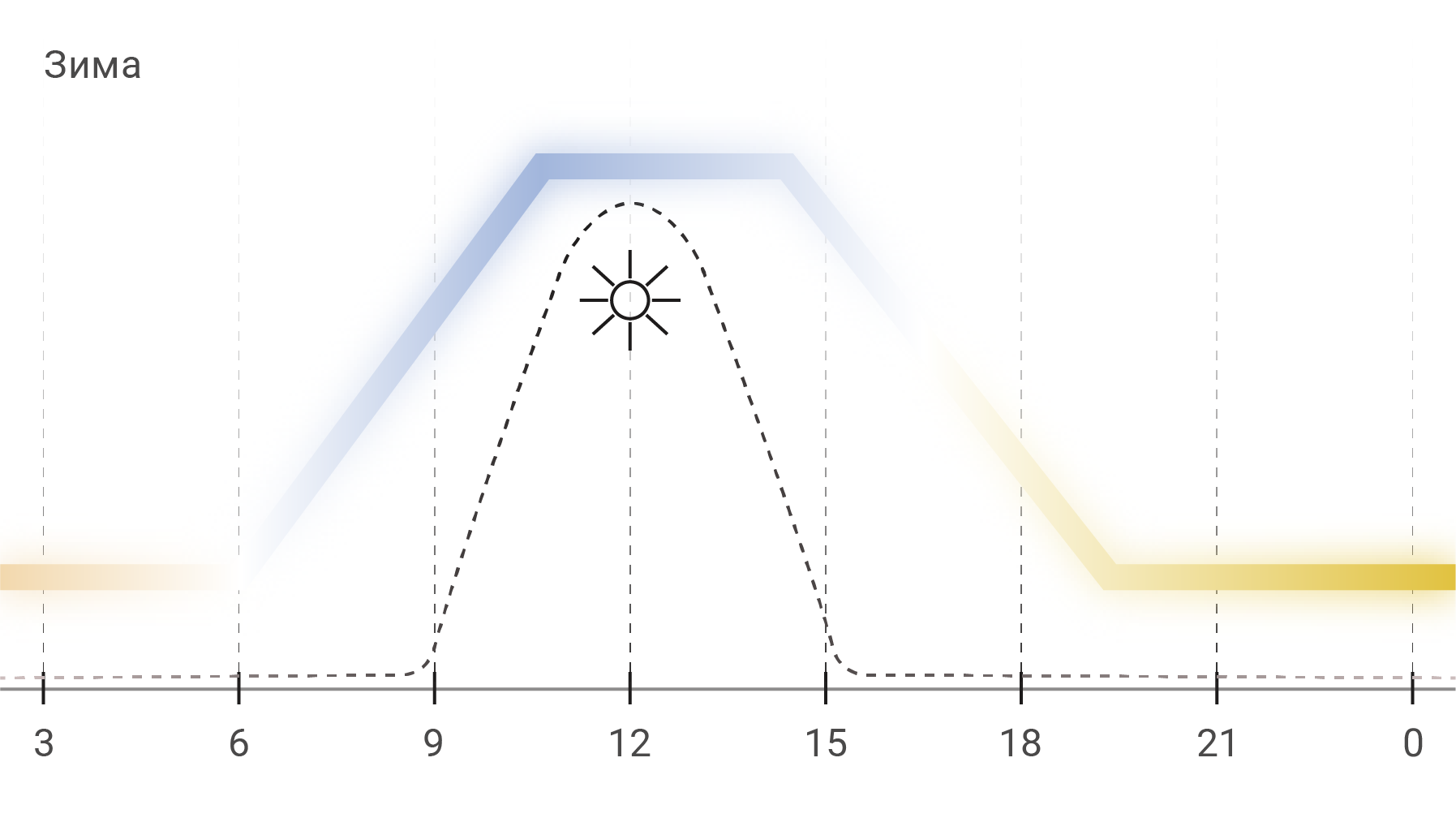 |
Summer and winter produce different natural daylight patterns in many regions. In summer, artificial lighting roughly matches the natural course of daylight; in winter, however, lighting extends the daytime phase. According to circadian rhythm, cool color temperature is recommended in the morning, and warm-white light in the evening.
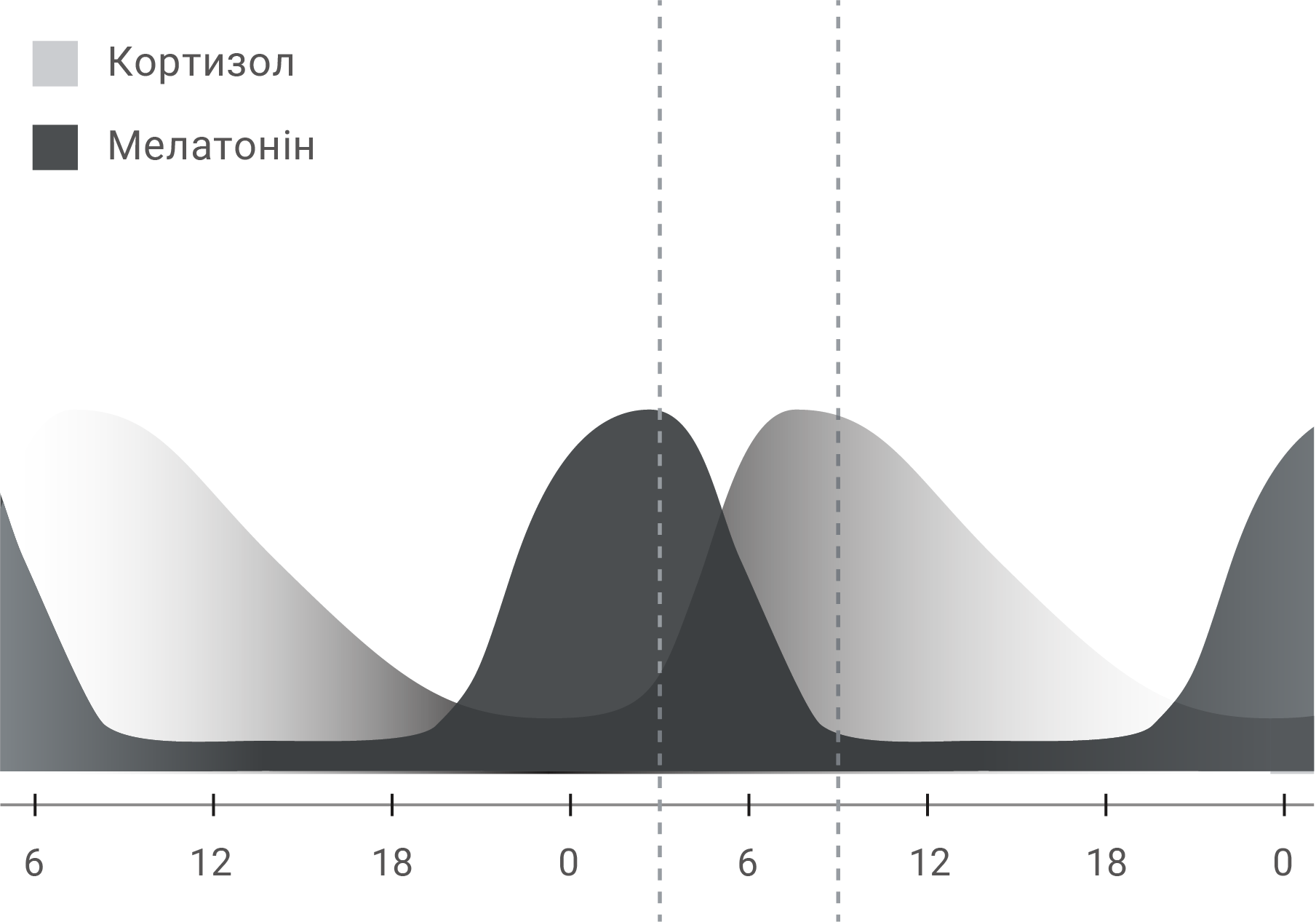
Next, priorities should be set for brightness and spectrum. Shorter wavelengths matter for the internal clock — for instance, affecting the secretion of the hormone melatonin, which controls the body’s daily rhythm, through the non-visual system. While normal vision has peak light sensitivity at 555 nm, for non-visual perception it can be around 490 nm.
In a typical work environment, color rendering is high, and for a fairly neutral white impression the color temperature is approximately 3000 to 5000 K: for non-visual responses, therefore, it’s not color temperature but illuminance that is decisive.
 |
 |
The hormones cortisol and melatonin act in opposite cycles. In the morning, the body produces more cortisol to activate metabolic processes, and its blood concentration decreases throughout the day. Melatonin concentration peaks at 3 a.m.
Human-centric lighting is not just dynamic white
Human-centric lighting is characterized not by individual fixture technical specifications, but by a specific approach to lighting’s overall effect. The term “dynamic white” is often used in media as a synonym for human-centric lighting. However, this characteristic refers to only one of four core lighting parameters within a comprehensive planning method. Equipping an entire office floor with identical tunable-white fixtures ignores the fact that different usage zones require different light distribution. Specific visual tasks need to be illuminated, while avoiding uniformity; a nuanced atmosphere should be created, and functional zones within the architecture should be structured. Compared to the time factor, the spectrum of light tends to be overestimated as a parameter of biological effects.
What are the benefits of human-centric lighting?
Lighting design that accounts not only for light’s visual impact but also for emotional and biological factors creates far more than just “good light.” It’s also a positive parameter in the value chain: for building owners, who increase their property’s value; for users, who in offices benefit from a work environment with better lighting quality and a greater sense of comfort; and for lighting designers, who can offer a broader range of services thanks to HCL.
-
- Increased value for investors. Human-centric lighting is particularly relevant in connection with building certification. Beyond comfort and visual comfort criteria, circadian lighting design is also evaluated here from a health perspective. This is often accompanied by digitally controlled, dynamic light changes, which can now be implemented via wireless control without rewiring.
- Increased attractiveness and productivity for business. Human-centric lighting allows employers to create attractive work environments tailored to individual employee needs. Flexible lighting concepts are also ideal for diverse and often changing spatial concepts that require creative and productive workflows. When lighting is used only where it’s needed, companies also make an important contribution to sustainability and corporate social responsibility. This creates competitive work environments, which is also an advantage in attracting qualified talent.
- Flexibility and autonomy for users. If employees can adjust lighting independently, this has a positive effect on their wellbeing. Managing lighting according to different work situations and individual needs supports motivation and creativity. This way, light can be optimally tailored to highly individual visual acuity levels and visual habits.
- A comprehensive design strategy for lighting designers. Architects face the task of considering daylight and artificial light from visual, emotional, and biological perspectives. Lighting designers bring their professional expertise into the planning process. Different functional zones are planned according to time of use and visual tasks.