
“Five seconds” — that’s how long, according to the U.S. National Library of Medicine, our eyes — more precisely, the cone cells — need to adapt from a bright environment to a darker one and begin to distinguish objects. Of course, this is an average, as many factors influence the duration.
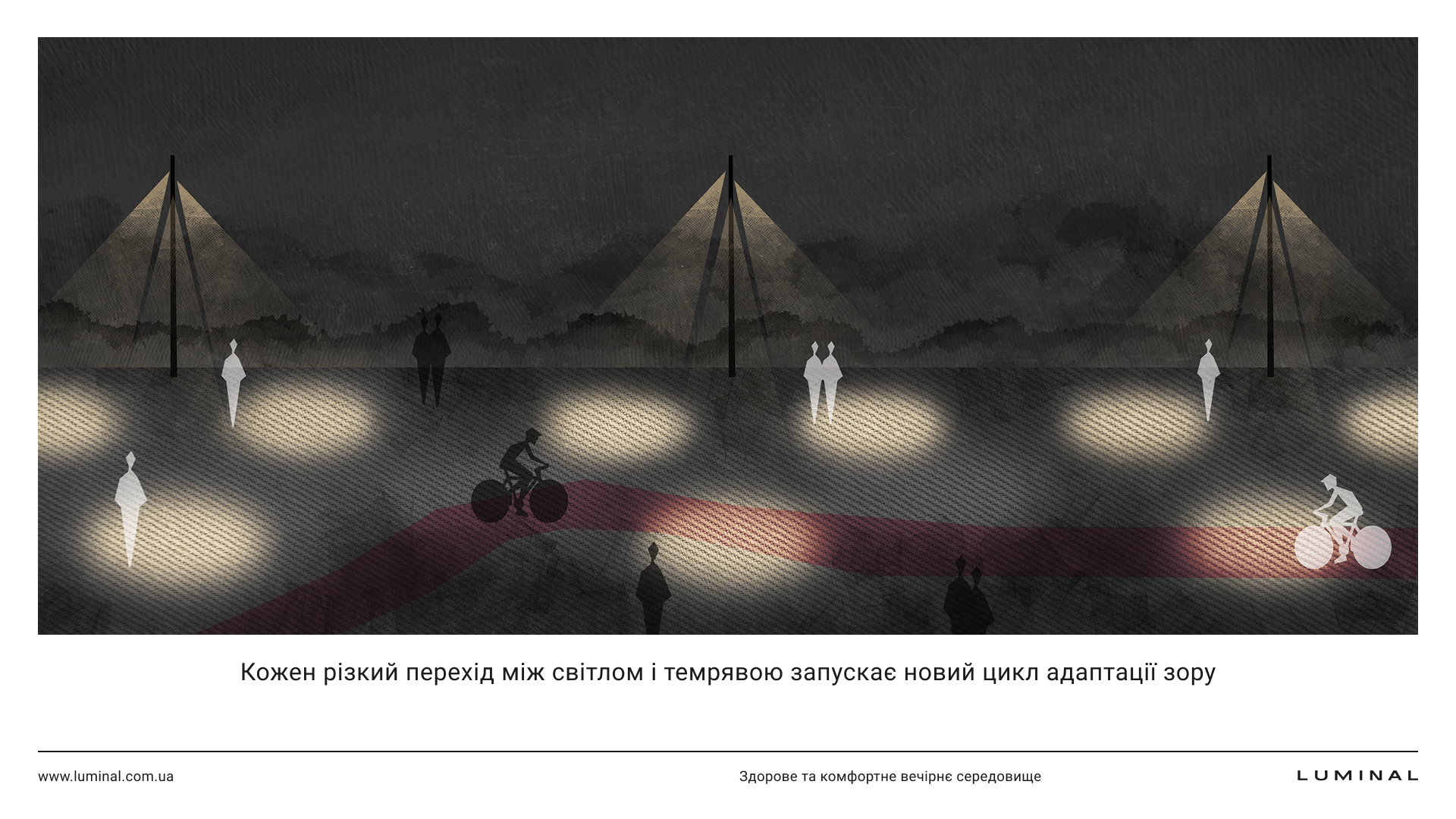
It may seem like a minor detail. But behind it lies a question of safety — one of the most critical functions of nighttime lighting, and one that is often overlooked. For example, when a car moves from a well-lit section of road into a darker one, the driver simply does not see (more accurately, does not have time to see) a pedestrian in the blind zone during those same five seconds. Every abrupt transition between light and darkness triggers a new cycle of visual adaptation.
Human-Centric Lighting: Markers That Shape Our State
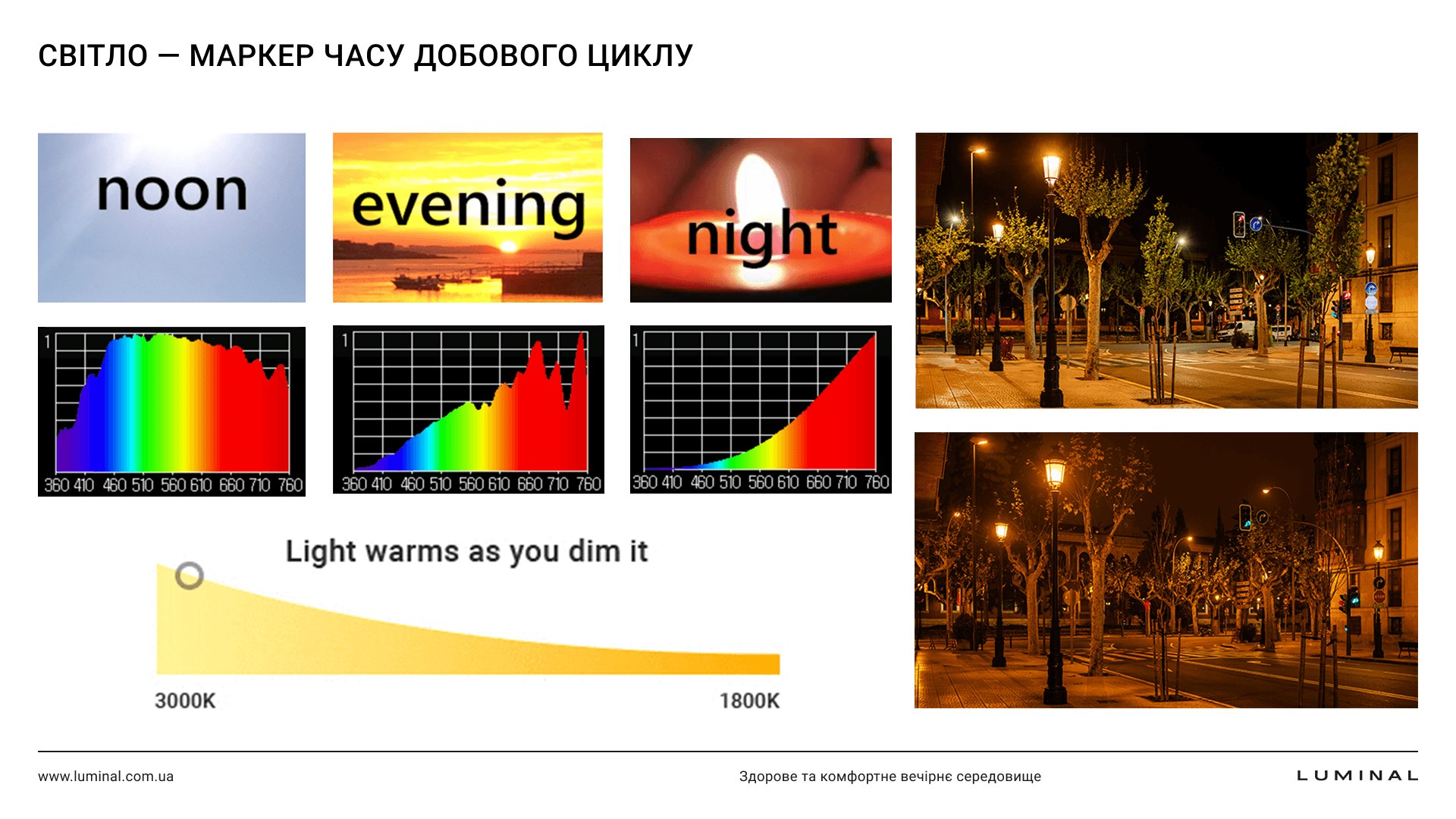
The second marker is the circadian cycle. The human body evolved over millions of years under natural light conditions: daylight, sunset, and then firelight. All our biological processes — including melatonin production — are attuned to this rhythm. That is why warm, “fire-like” light in the evening is not merely an aesthetic choice; it is a physiological signal that the day is ending and the body should shift into recovery mode.
At the same time, color temperature alone is not a sufficiently precise tool. A far more informative parameter is the light spectrum — the full distribution of wavelengths emitted by a source. This is why, in design, it is important to consider not only the numerical value in kelvins, but the actual spectral composition of the light.
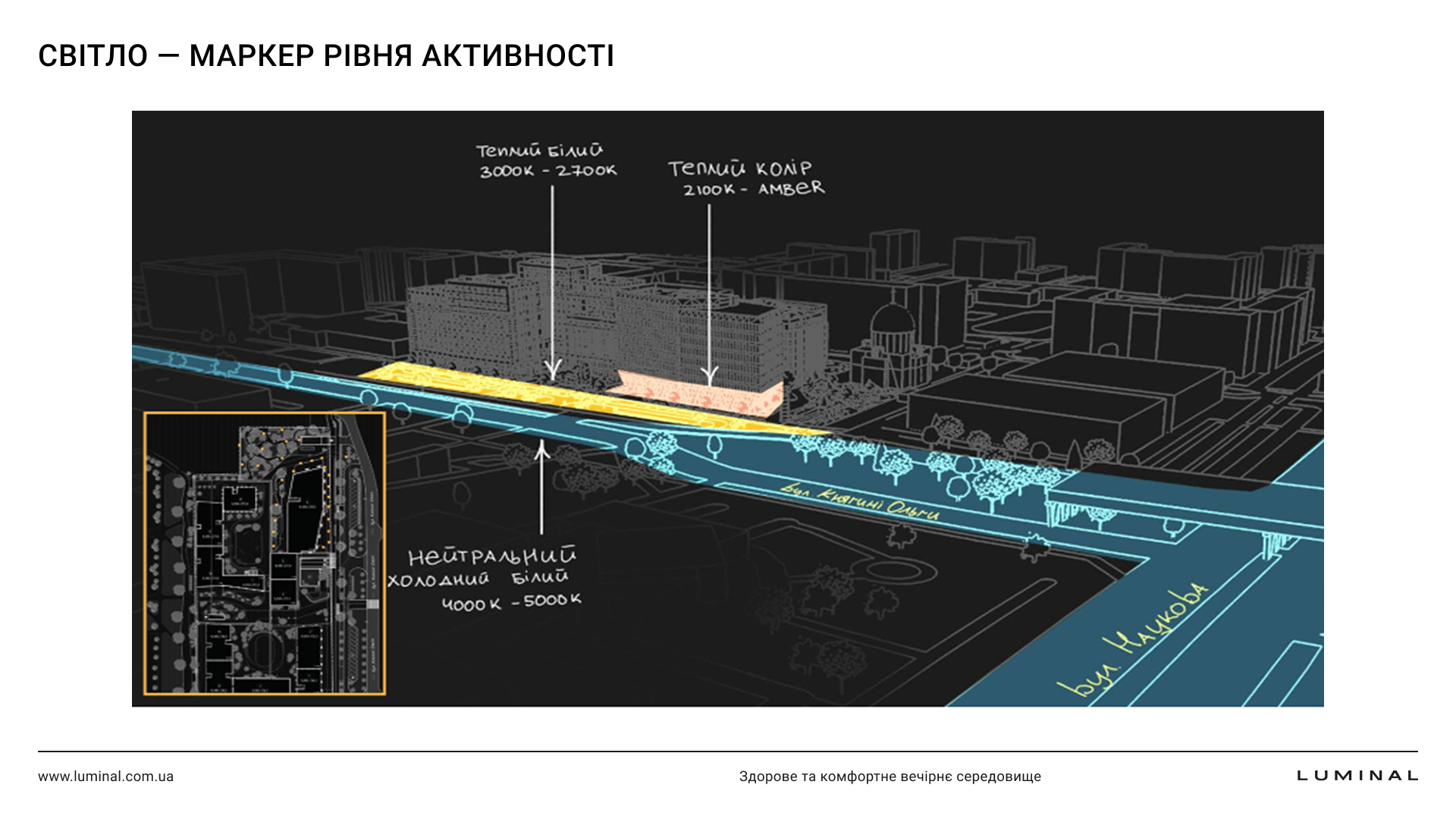
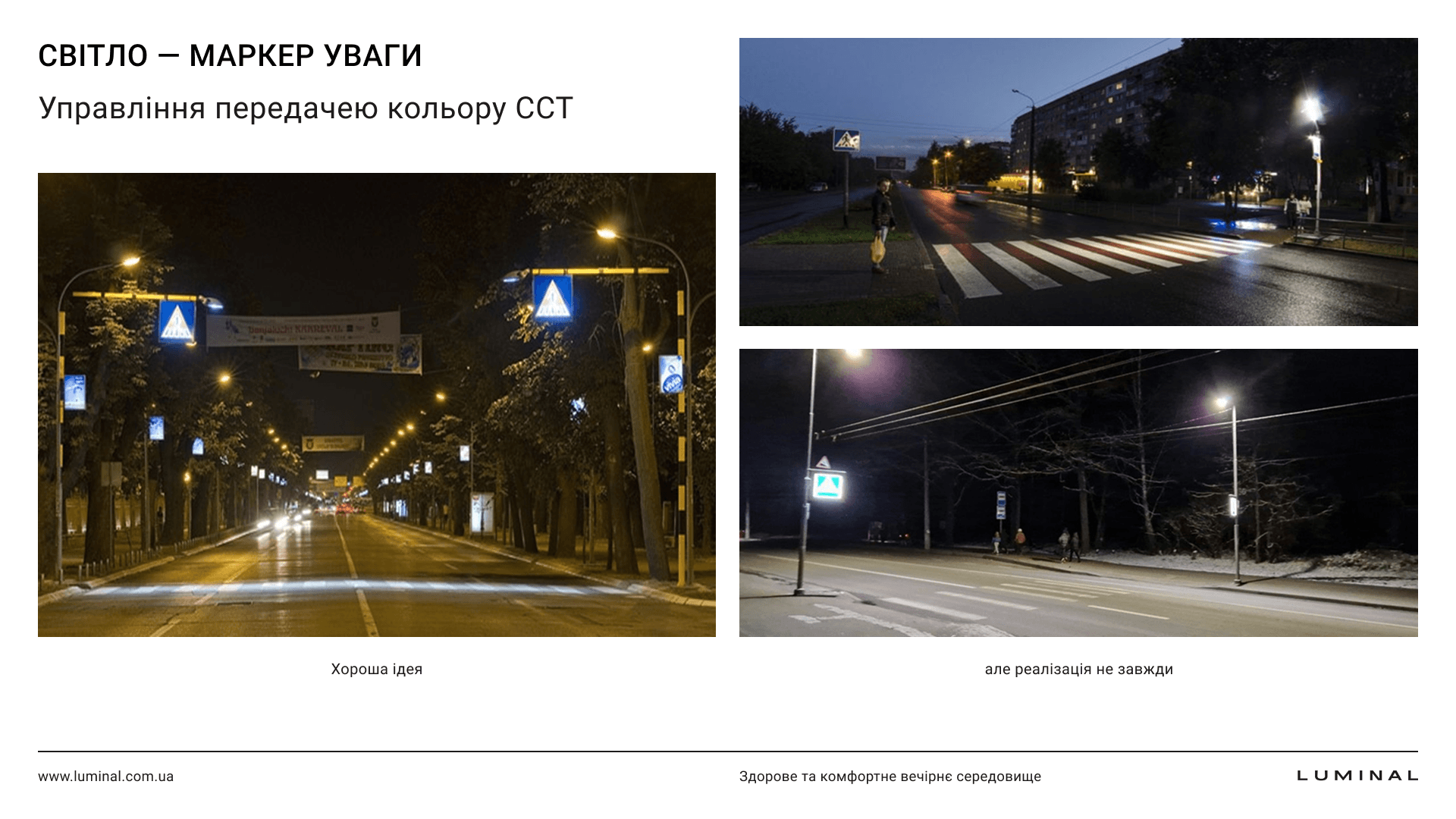
The third marker is pedestrian crossing safety through color. There is a widespread — and generally sound — idea: to distinguish pedestrian crossings with a different color temperature, so that drivers can recognize the marker from a distance and anticipate the presence of pedestrians. The logic is solid.
In practice, however, this approach is often poorly executed — either the luminaire causes glare because no one accounted for the glare index, or the difference between the color temperature of the crossing and the roadway is so minimal that no real marker is perceived. In such cases, the entire concept loses its effectiveness.
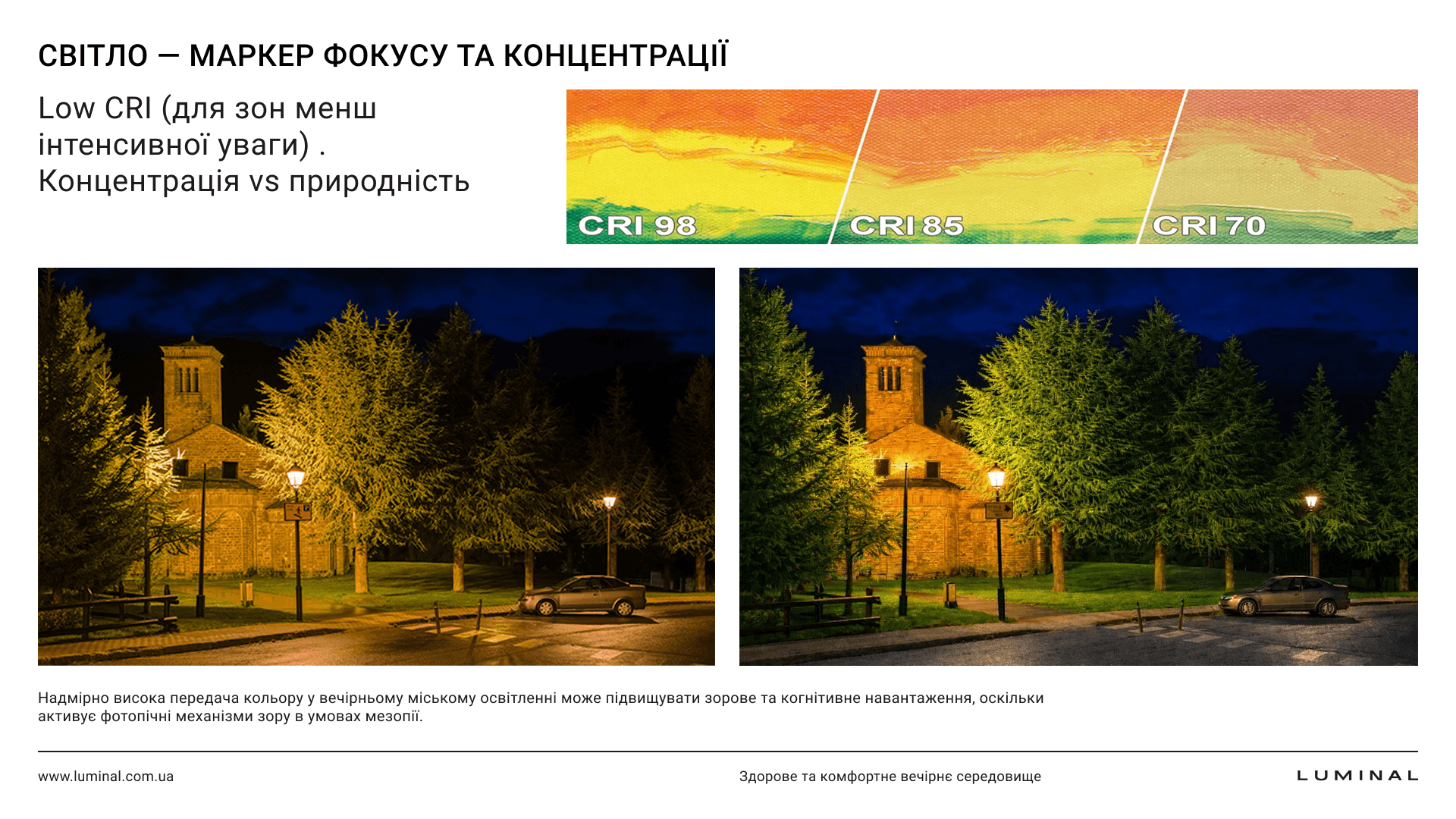
The fourth marker is focus and concentration. At night, human vision operates in a so-called mesopic mode — intermediate between daytime (photopic) and nighttime (scotopic) vision. In this state, color rendering tends to correlate with color temperature: warmer light generally provides lower color rendering, allowing the brain — less engaged in processing color — to rest more.
But is this always beneficial? In areas where attention and alertness are critical, higher color rendering may be necessary. In places intended for rest, the opposite may be true. Where exactly to draw this boundary in the urban environment is a question that should become part of a serious discussion in the development of a lighting master plan.
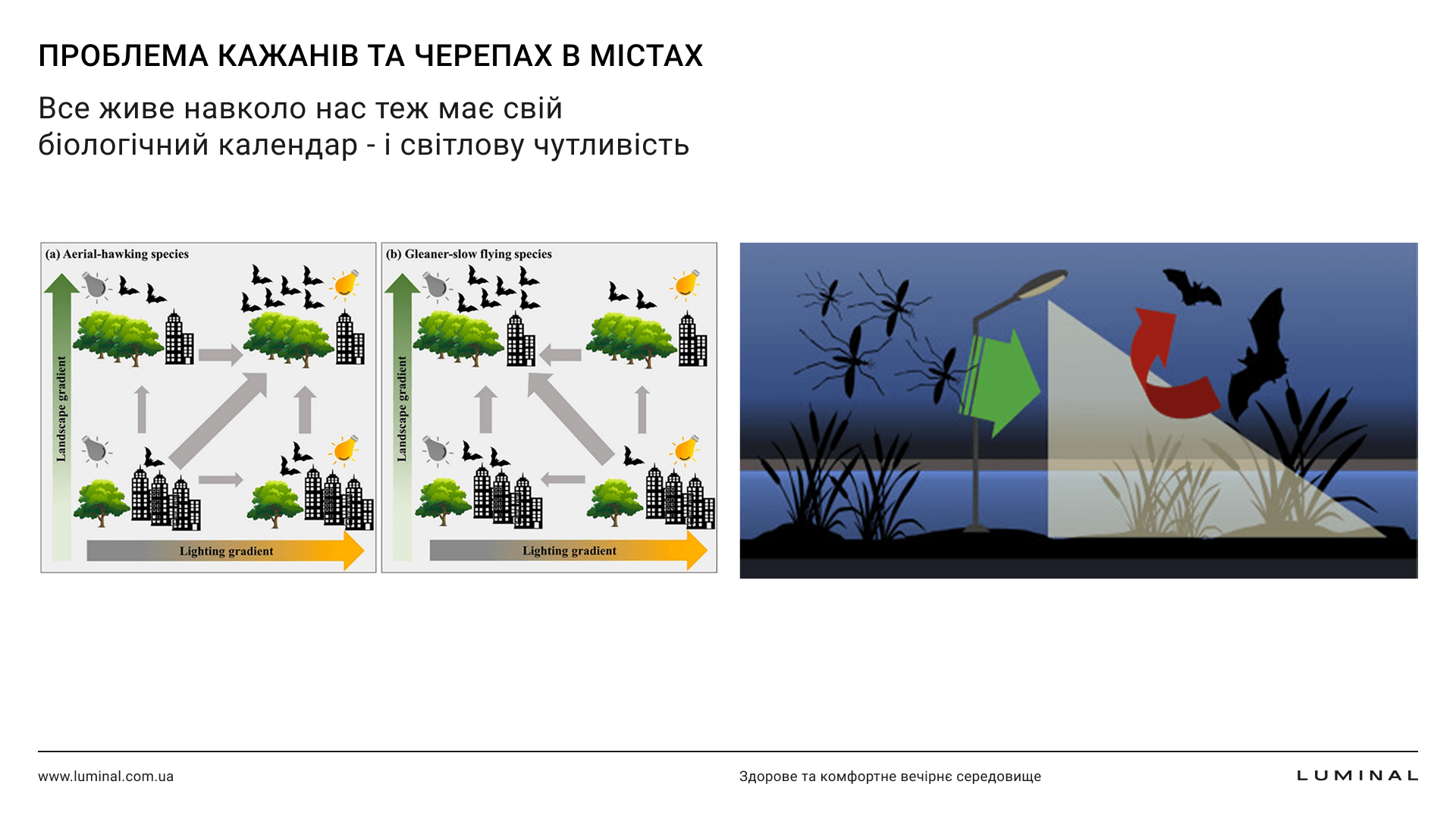
The impact of urban lighting extends beyond humans — it affects all living organisms, the entire urban biome, each with its own circadian rhythm.
A particularly telling example is bats. A single bat can consume up to three thousand insects per night, making them one of the key regulators of pest populations in urban ecosystems. However, artificial lighting disrupts their natural routes and alters their activity patterns, as they are nocturnal animals that rely on darkness for orientation.
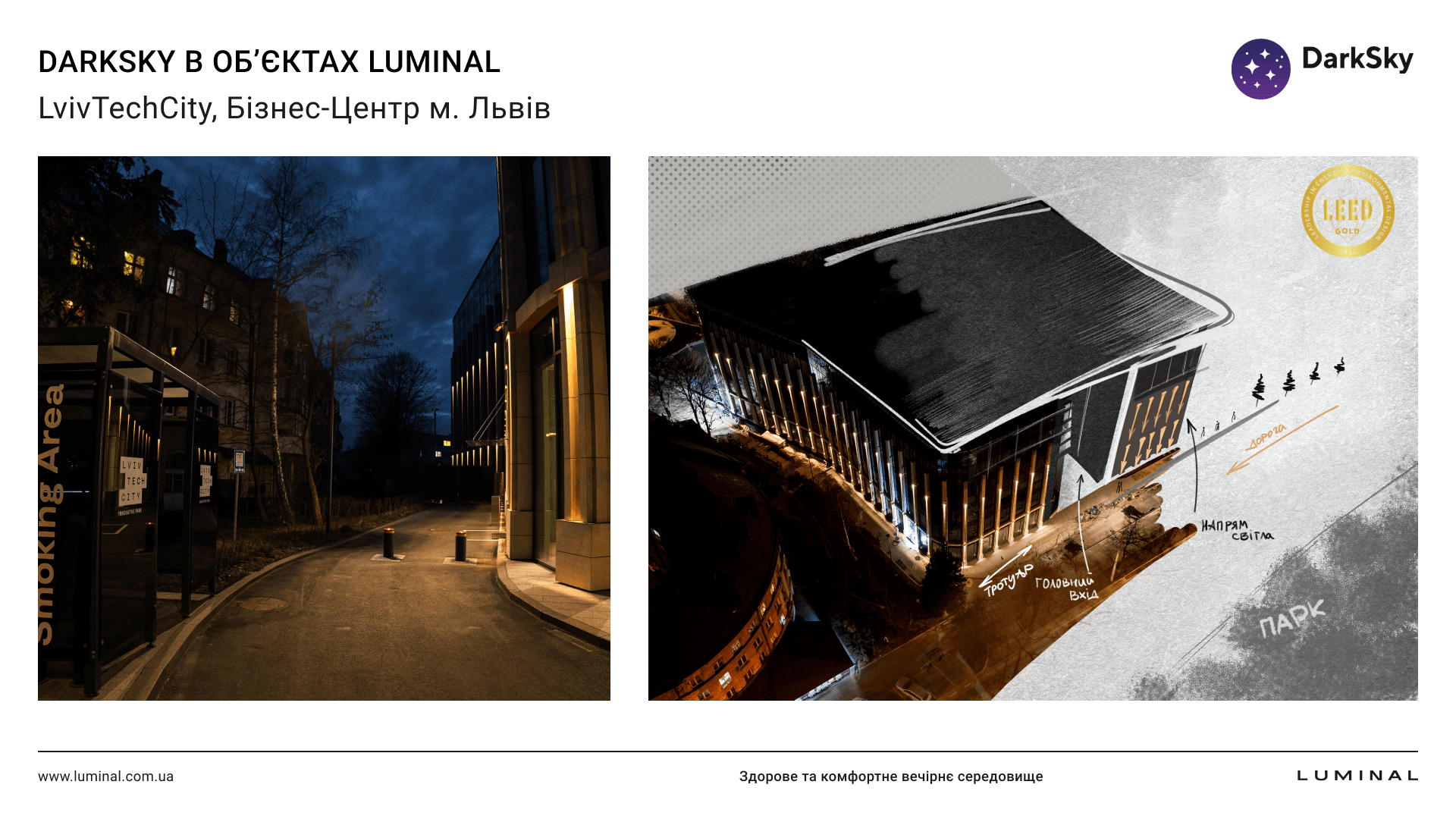
Two LUMINAL projects demonstrate how these approaches work in practice.
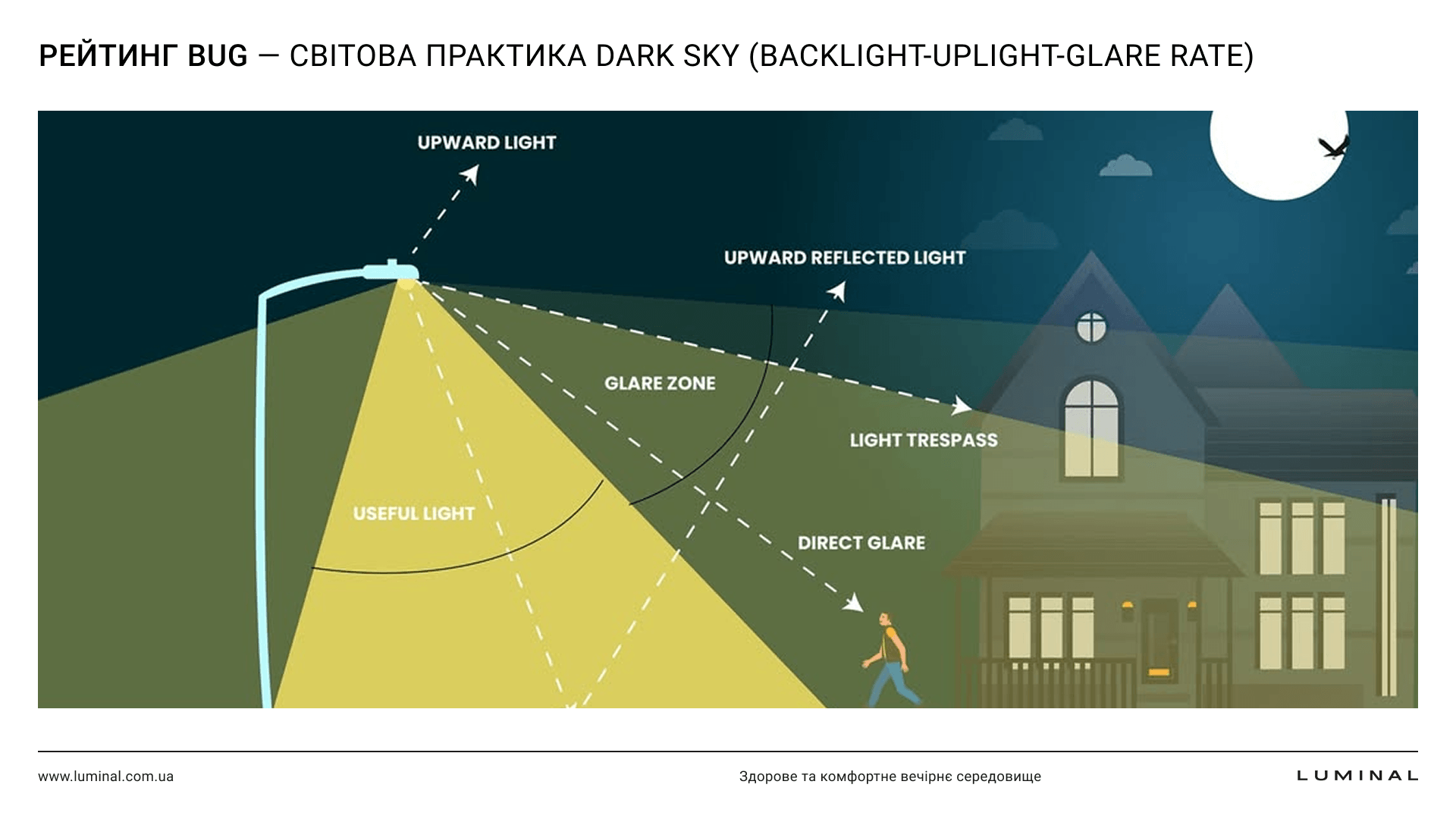
The first is Lviv Tech City — a residential complex designed by the Warsaw-based bureau UDP, with LUMINAL responsible for facade lighting and site illumination in accordance with LEED standards. The entire lighting system operates strictly top-down — with no uplight whatsoever. The contrast between illuminated and dark areas at the pedestrian level does not exceed one meter, complying with established norms. The spectrum is enriched with red wavelengths (high R9 value), making the lighting both comfortable for humans and environmentally responsible.
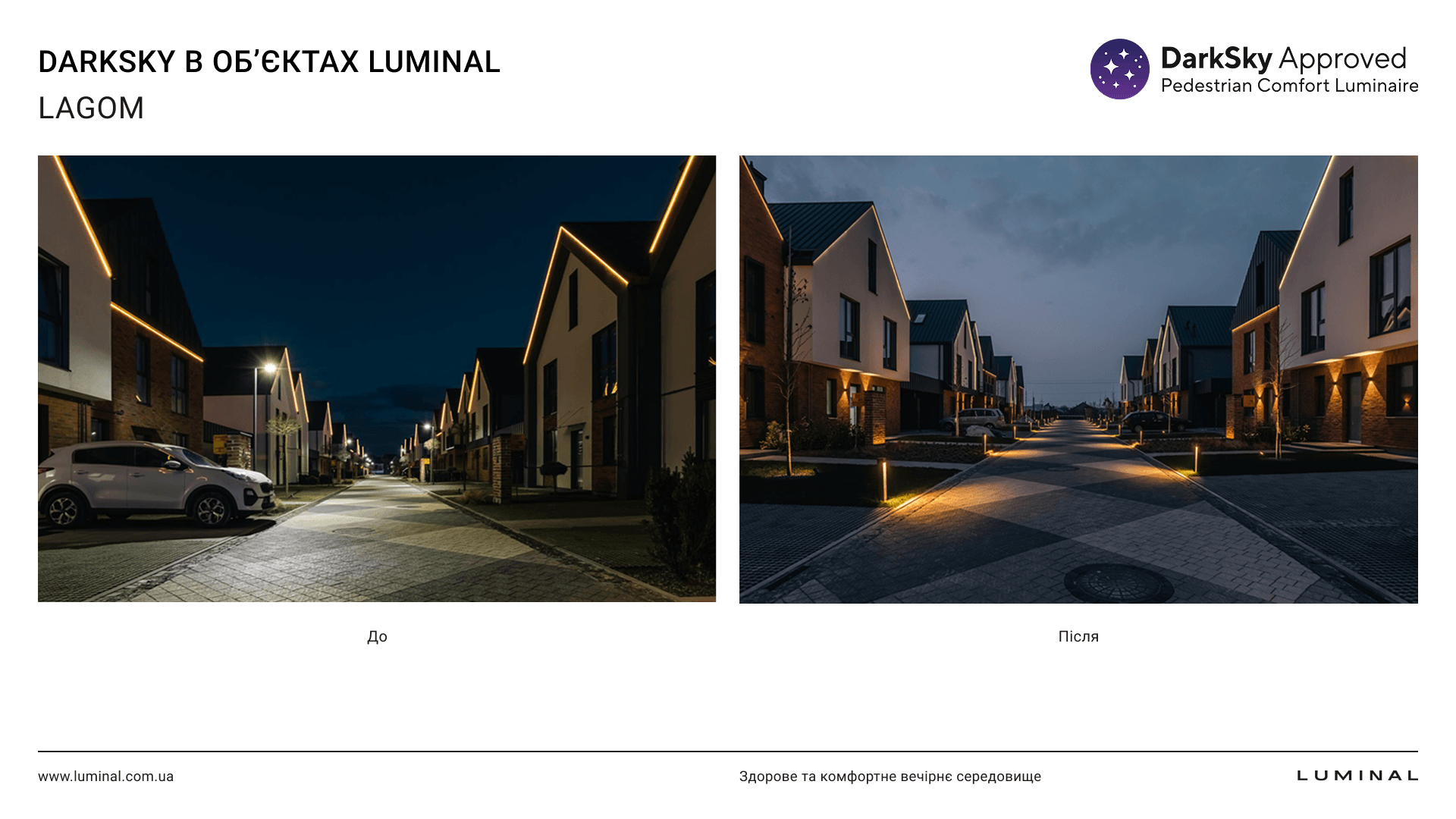
The second is a cottage community where LUMINAL was invited to redesign an already installed lighting system. A custom bollard luminaire was developed with an inclined reflective surface: the light is bounced off this surface and directed downward, while the source itself remains completely hidden from direct view — no uplight, yet a wide and uniform distribution of light.
This fixture was later included on the Dark Sky International website in the list of Approved Luminaires. A simple конструктивне рішення that fully aligns with dark-sky principles.
How to Apply This to Lviv’s Lighting Master Plan
For those involved in developing the city’s lighting master plan, the sequence of actions should be as follows. First — define the markers: where activity is needed, where calmness should prevail, and how the city transitions throughout the day. Next comes zoning, taking into account illuminance levels (lux), uniformity, and the absence of glare and visual discomfort. Only after these priorities are clearly established should one move on to systematizing specific technical solutions. In this order — not the other way around.
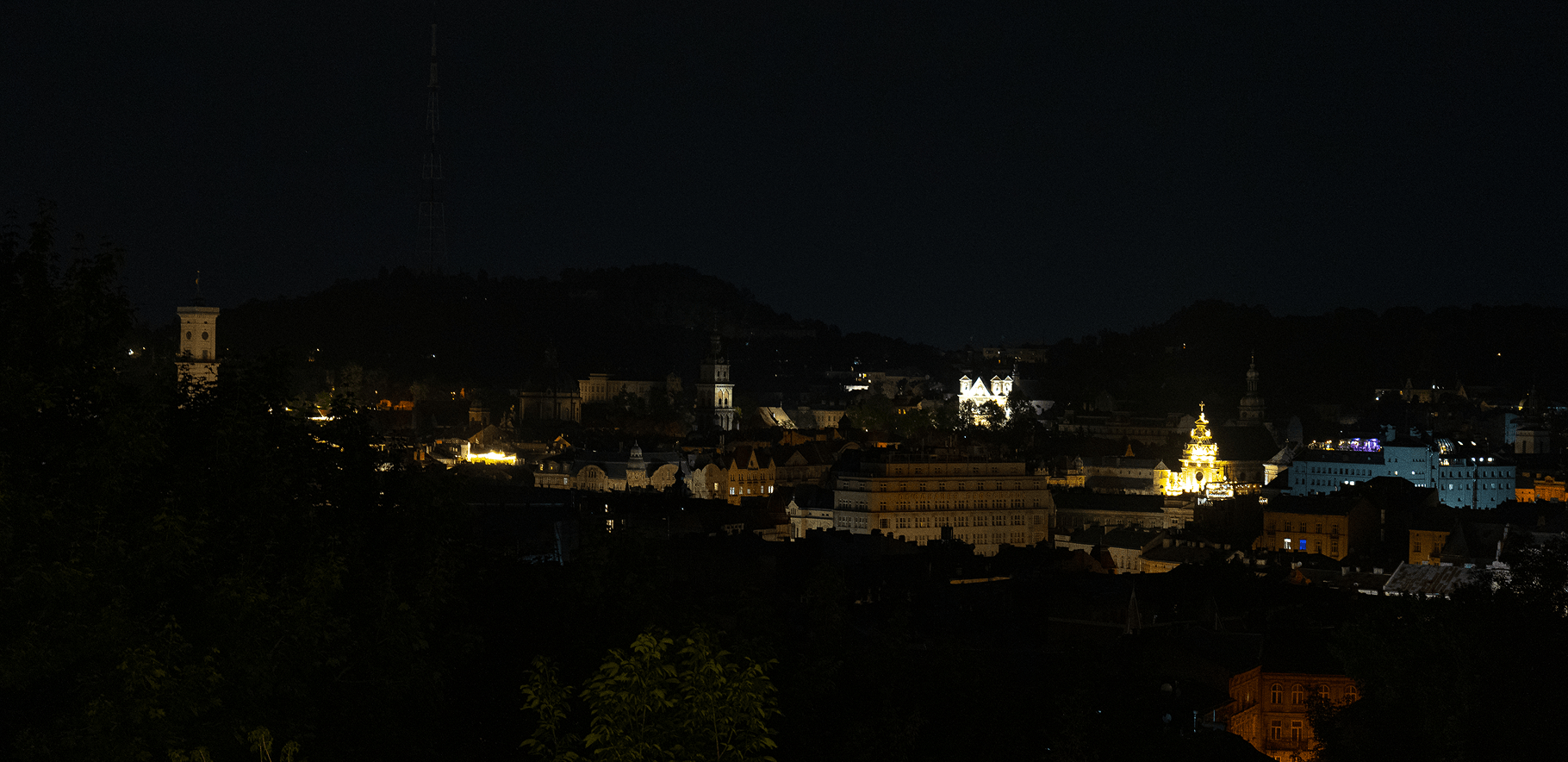
An aerial photograph of Lviv taken from the Citadel during a test lighting setup reveals a telling picture: harsh contrasts on facades, over-illumination, and a chaotic mix of color temperatures. But this is not a reason for discouragement — rather, it is further evidence that the work ahead is both necessary and meaningful.
Summary of Igor Smetana’s Talk at the Public Event “Lighting 2.0”