It’s no news that light can affect a person’s physical health — but what about their psychological state?
Right now, more than ever, the balance of a person’s emotional state matters. Constant stress wears us down. We lack calm, balance, and recovery. Recreational spaces help people find peace, heal moral and physical wounds, rediscover themselves, find motivation to keep moving forward, and gain faith in the future.
Public spaces, parks, medical centers, and religious buildings help us with this task — and light can either support or hinder it.
Two examples from our portfolio: the comprehensive lighting of St. Paraskeva Medical Center, and the interior decorative lighting of St. Sophia the Wisdom of God Church.
These two projects required fundamentally different approaches — both in concept and execution. The medical center needed functional light that would be comfortable for staying, working, and healing in. The church needed decorative light that would complement the vision of the icon-painting artists, creating an atmosphere of spiritual calm. While the medical center opened with a sense of reliability, the church has been decorated with light over the course of years.
ST. PARASKEVA MEDICAL CENTER
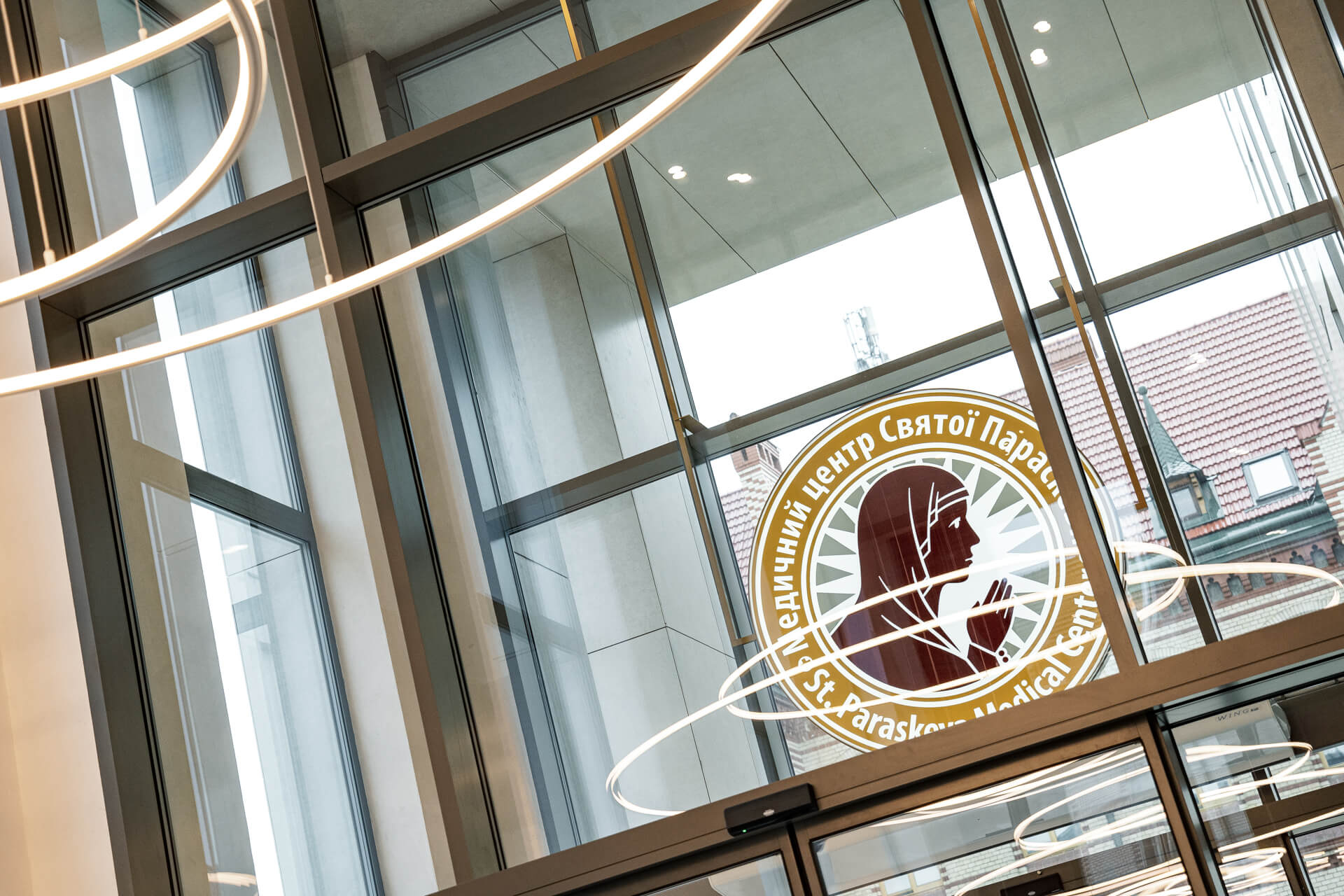
A complex of buildings united by a small park. A place where people come for help with treatment and to restore their physical and mental strength — this needs cozy yet high-quality, well-designed lighting.
We developed a comprehensive concept that included lighting for the newly built structure and its interiors, lighting for three restored buildings, as well as the outdoor plaza together with technical zones where patients spend time. It was clear that this place needed light that would be pleasant to be in.
We created two concepts that distinguished the complex and emphasized its image without sacrificing comfort.
The first concept directed attention to the main building of the complex. With light, we created a labyrinth-like line of movement. Symbolizing the path to recovery, the light traced a direction from the main entrance group to the building, transitioning into the façade lighting. This pattern shifted depending on the view of the main building and revealed it from different perspectives. All light sources were concealed to avoid irritating glare effects.
Later, after discussion with the architect, we agreed it would be better to go with a more restrained option — one that would simply support the architectural form without adding a separate decorative layer of meaning to the light.
We proposed lighting all the buildings using an identical method: contour lighting of the window frames. This method is often used in the architectural lighting of hotels, to give the façade volume and lend intimacy to the evening light atmosphere.
The whole complex is done in warm tones. The building’s outer perimeter is lit in amber, which pairs with the classic nighttime glow of sodium lamps. The entire interior area is lit at 2700K. This kind of light is pleasant for people and creates a space where an atmosphere of calm prevails. Here, every visitor can rest, and patients have comfortable conditions for treatment and recovery. The absence of glare, warm white light temperature, and simplicity of form are the key features of the lighting at St. Paraskeva Medical Center.
“A person exists through emotions”
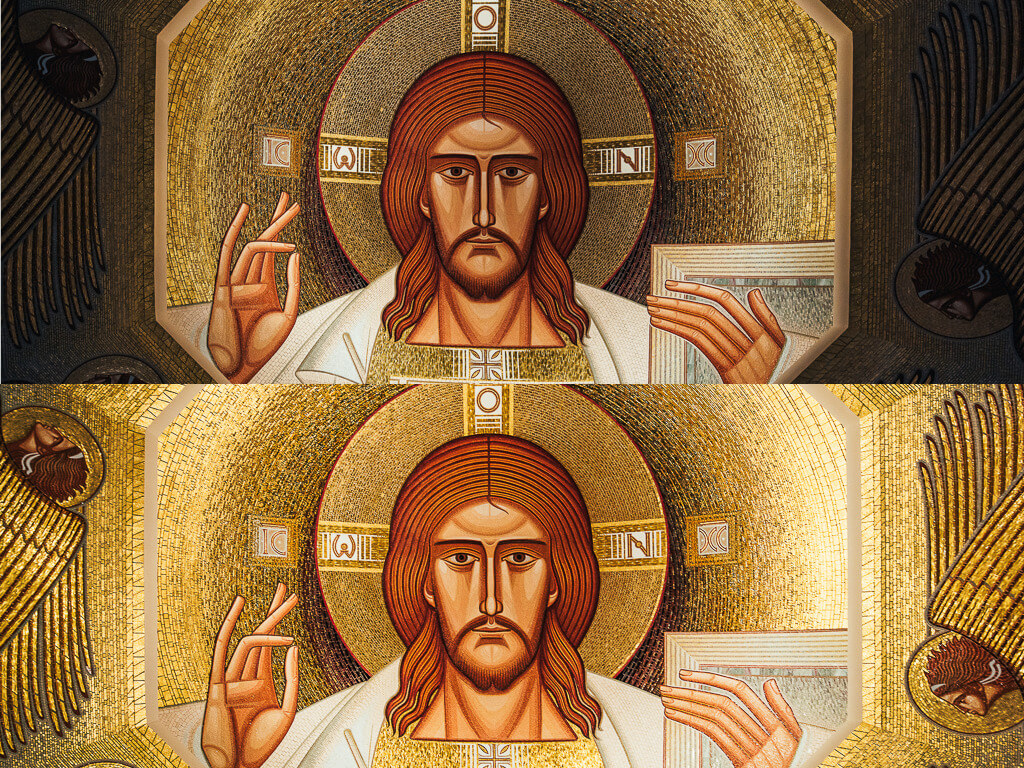
ST. SOPHIA — THE WISDOM OF GOD CHURCH
This lighting project called for a completely different approach. Here, light is predominantly natural, and the artificial lighting is meant to create an atmosphere of spiritual calm, set the tone, and orient the space in a way where the sources themselves remain unnoticed.
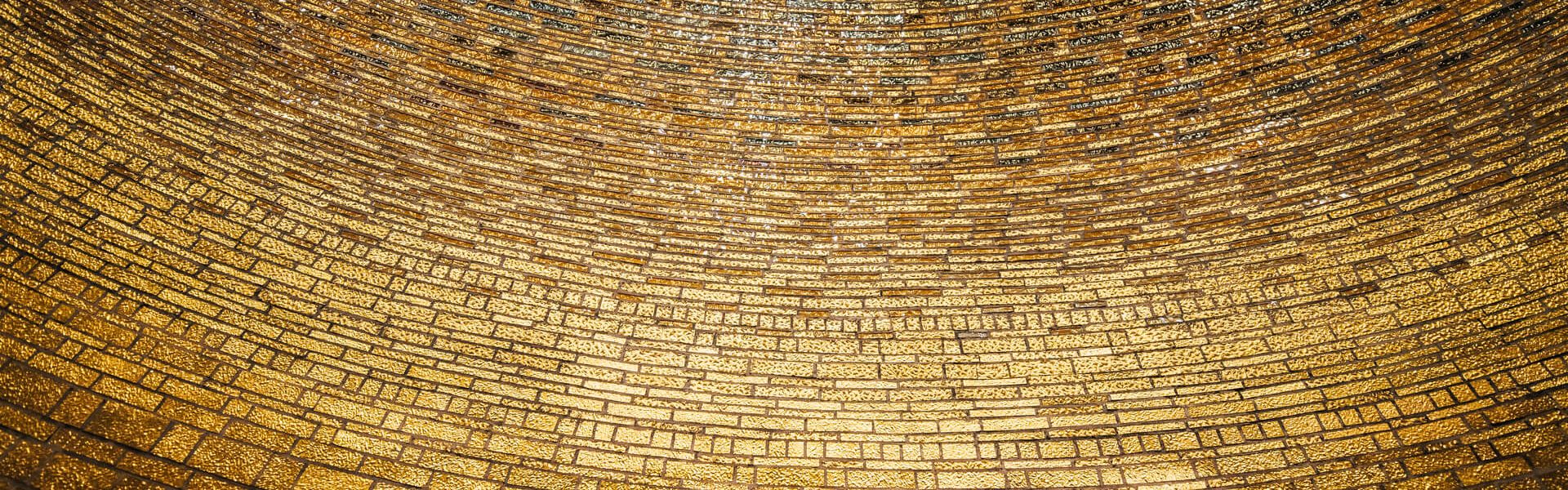
Work with the mosaic and stained glass took place over more than one year. There is a dome covered in smalt mosaic and a stained-glass window above the altar, whose lighting required unconventional solutions. Traditional lighting design didn’t work here.
This was creative work done together with icon-painting artists, involving several stages:
- concept testing
- selecting solution options
- designing and developing fixtures
- on-site testing
- implementation and calibration
Lighting a mosaic surface is no simple task. The smalt surface reflects light in different directions, and to avoid glare, each surface had to be approached experimentally — selecting the right optics and light direction for every fixture. Combining quality lighting modeling with further on-site experimentation made it possible to achieve the best results.
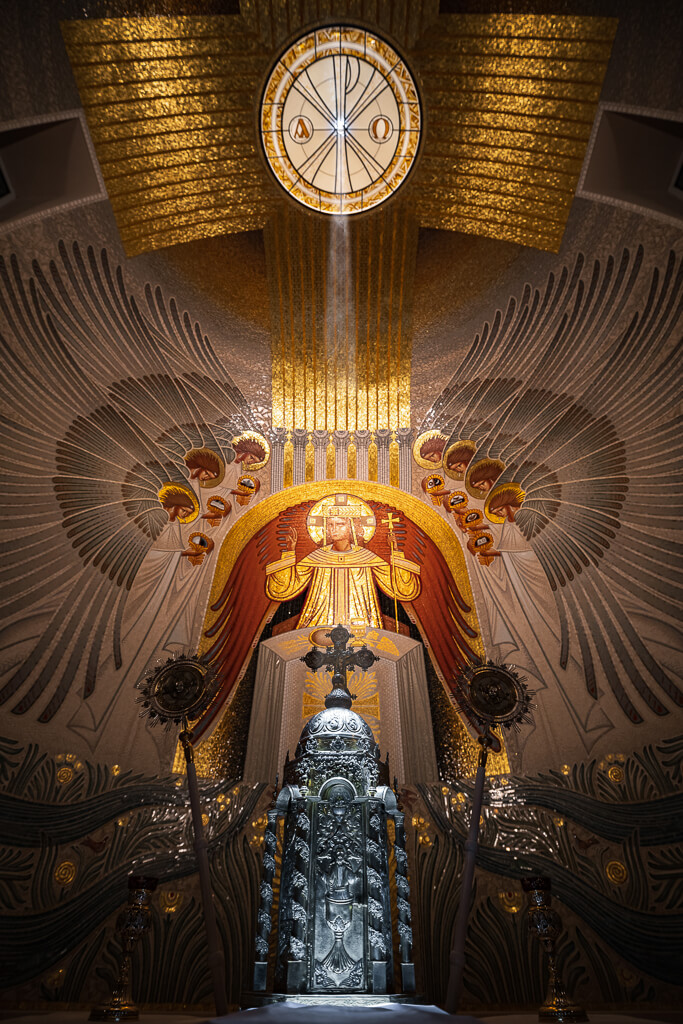
Stained-Glass Window
The stained-glass window here also required complex calculations and unconventional approaches. Because stained-glass inserts are designed to gather as much light as possible, they’re often lit indirectly, since natural light already passes through the glass. In this church, the stained glass is also a complex space that reflects and redirects daylight onto the surface of the window itself.
In the evening, this space darkens, and the stained glass dims. To imitate daylight, we placed floodlights using a classic method, but that alone wasn’t enough to reveal the glass’s volume. After a series of experiments together with the artists, we additionally developed a matrix of custom fixtures, which helped create extra highlights on the glass surface, bringing it closer to its natural volume. But because of the different types of glass used in the window, we ran into a number of challenges: not all surfaces reflected light equally, and some sources needed to be concealed. Together with the stained-glass masters, we developed solutions that partially hide the visibility of the light sources themselves.
The “coda” of the lighting is a beam of light that passes through the center of the stained-glass window and falls onto the surface of the altar. During services, this beam becomes visible. We further decorated the opening through which the focused beam passes with a cylindrical shade of calculated shape and carefully selected material, which allowed us to conceal all the technical details behind the stained glass without creating additional shadows.
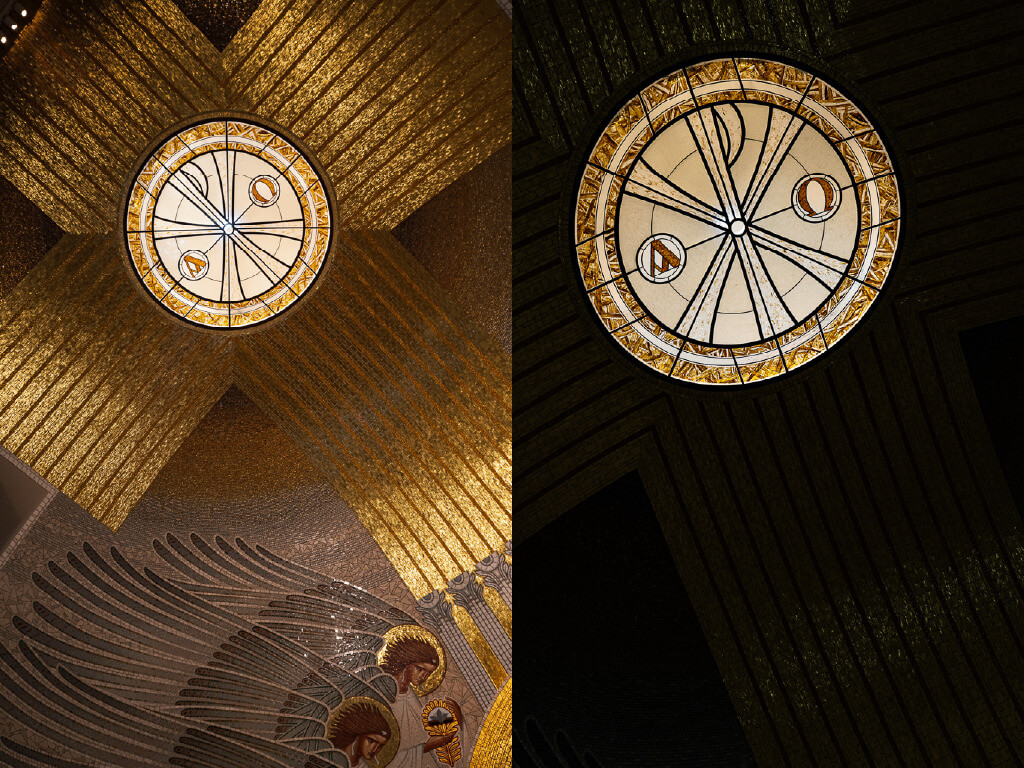
All of this intellectual and artistic work resulted in comfortable, cozy, and invisible light that complements the atmosphere of calm characteristic of sacred spaces. Even where everything seems simple and quick to do, complex calculations and experimentation may still be needed — because as different as these two projects are, both share a single goal: emotional comfort and calm for people.
It’s no secret that light can be used to adjust emotions, so in this period of emotional stress, our task is to help people reduce the negative impact of their surroundings through light.
Today, we simply don’t have the moral right to neglect this important function of light. And it’s not about lighting costs — it’s about a professional, thoughtful approach, about building a dialogue of mutual respect for every participant’s work on a project, about shared values and quality criteria, and about a vision of the future — both before and after our Victory.